
While weaving craft with natural fibers is one of the widest spread crafts in the history of any human civilization, it is hard to say just how old the craft is, because natural materials baskets seldom survive, as they are made from perishable materials like natural fibers ,grass, river reeds, cane ,vine and bamboo

There are many kind of natural fibers used in Uttra kannada region by our ancestors, local tribes and communities .these vegetations are available abundantly in the nature where they lived .
They used it for fencing, making shelters like huts and machans , making baskets ,ropes , pot holders and pot hangings , tying animals ,caring loads, tying bundles making jewelries , stringing beads , weaving mats, cradles for the new born babies ,traps for fishing etc. Natural fibers were part of their daily life . weaving techniques are used to find protection from rain and sun, and to build boundary lines or safety from wild animals and enemies Most of the crafts, kitchen and farming utilities were depending on this natural fibers until plastics came and took away the importance of this natural fibers
The local story of natural fibers
Weaving with natural fibers is a unique rural craft. done by hand and each product has its story weaved in the local culture
There are many applications for weaving techniques from simple mats, ropes, brooms to baskets .Here I have documented various types traditional weaving craft in the cultural context of Uttara Kannada region, Karnataka Most of them are lost in the plastic and synthetic wave
 |
| halakki women observing cane baskets |
What makes basketry, weaving craft so special is that it has evolved in cultures around the world, as we all collectively found the need to carry things, store items,
There are a multitude of uses of natural fibers ranging from sleeping mats to traps meant for catching fish, and they play a prominent role in some religious ceremonies.
Most of them are harvested on a particular season to get the best results. each one has to go through a certain process to get the final product which can be weaved later
Natural fibers /plants for making rope,string and twine from western Ghats :
1.. ನಾರು ಬಳ್ಳಿ /ಕೌರ್ಗಿ ಗಿಡ (Helicteres isora Indian screw tree)
 |
| Helicteres isora Indian screw tree |
The best type of isora fibre is obtained when the plants are 1-1.5 years old; the plants older than 2 years yield coarse and brittle fiber.. The best month to harvest is July to September. In costal Karnataka they harvest in the month of September and the fiber will be ready for the Deepavali festival for the ritual of tying new ropes for the cows .Thin ropes made from these fibres are used as cordage for making cots, tying cattle and ploughs The isora fibre has the potential for handicraft products.
.The stem has to be harvested in the month of August or September. The outer plant bark is peeled off with bare hands for the fiber and soak in the flowing water almost 1 month . This harvest is combined with a festival called bali padyami Deepavali which comes in the month of October That day villages traditionally tie a new rope made by this naaru balli to their cows . That means harvest has to be done before 1 month of this festival and it is exactly comes in August or September … The bark is also a source of strong fiber used as cordage for making cots, tying cattle and ploughs

. The fiber is called naaru and the rope is called naarina balli
 |
2. ಕತ್ತಾಳೆ (Agave sisalana)-Natural fiber thread from Halakki tribe
Kattale /mani daara ಮಣಿ ದಾರ (Agave sisalana) leaves are quite fibrous and have been used to make rope and twine for thousands of years. In fact, the Inca and Mayan peoples used it extensively: not just for making cordage, but also woven into cloth for garments, hats, footwear, home furnishings, and paper.
 |
| Kattale (Agave sisalana) |
 |
| kattele naaru made by halakki woman |

In Uttara kannda region halakki tribe women wear a heavy bundle of beads in their neck if you go back to their story of beads you will be thrilled to know they used to use natural fiber to make thread to string this beautiful beads . sadly now they are using nylon threads and plastic beads They never bought necklace but beads and string the beads themselves in a delicately woven thread with natural fiber
Kattale is a thorny cactus kind of plant which grows in the wild used mainly for fencing .Halakki tribe women who goes to the forest to collect fire wood pick up 2or 3 of these long leaves which they call it locally mani hede ( snake like leaf for Beads) There are two verities depending on the colour gray and green they say gray leaf will give more fiber compare to green
In the rainy season they harvest these leaves and soak it in the flowing water .When they get time in the summer they take out this leaves which is turned into fiber .they separate the hair like thin strings and weave into thin thread to string their beads .They also use the fresh leaves to retrieve fiber in a traditional way using sharp edged bronze plate by scrubbing the thin flesh on the leaf
3. Coir rope making
Coir, otherwise known as coconut fiber, is the natural fibrous material found between the hard, internal shell and the outer coat of a coconut. Retting is a curing process whereby the husks of the coconut are kept in an environment that encourages the action of naturally occurring microbes.
Green husks are buried in pits dug along riverbanks, berried suspended by nets in a river and weighted to keep them submerged. The husks are left to soak for at least six to nine months.
Hand made coir ropes are disappearing craft on the bank of the sharavati river .
.JPG)


.JPG)
Weaving brooms from the local grass: hittanade hullu in kannada (Eriocaulon species)
It grows in damp soil or shallow water of western Ghat region. Traditionally women weave brooms and baskets with this delicate grass (though the grass looks delicate it has good tensile strength) the process is you have to rewove the white head which looks like a human skull (Burude in kannada ) then the grass has to be dried in the shade for 3 days until it turns into golden yellow then weave horizontally then role it to make broom.
traditionally these brooms were used to broom the gods room or fire place now this beautiful local craft totally disappeared from the village . heard that they used to make baskets with grass ican just imagine beautiful golden yellow grass weaved into tiny golden baskets but never got to see this forgotten craft of making basket


 |
| hittande hidi |
Mundki hullu (Pandanus unipapilatus) and kedige hullu (Pandanus odorifer)
Both belong to the family of pandanaceous (screw pine family).These are two varieties of thorny bushes/shrubs which grows in Uttara kannada region along river side.and beach side. It also grows near the streams. Both look the same ..Local tribes use both the grass to weave the mats .. Gamokklu tribe from the river side mainly use the
mudki hullu which grows along the river side Halakki tribe from the sea side use kedgi hullu which grows
near the sea side ..

 |
| Mundki hullu |
This river reed grows along the Sharavati river bed. Locally it is called Geykana hullu
It is also used as a fodder for the cows .. This river reed is harvested after the monsoon during October or November month until February .Harvesting is normally done by the women .Women themselves take the boat to harvest the grass .After harvesting it has to be dried
before weaving

 |
| Geykana hullu : (cyperus malaccensis) Cyperaceae |
Echalu mara : palm tree (Phoenix sylvestris)
commonly known as: date-sugar palm, Indian wild date
In Uttara kannada region, deep in the forest siddis ,kare okklu, kumri maratis, deevaru
women weave mats with special kind of date palm called Eechalu. The weaving pattern and technique totally
different from sea and river mats
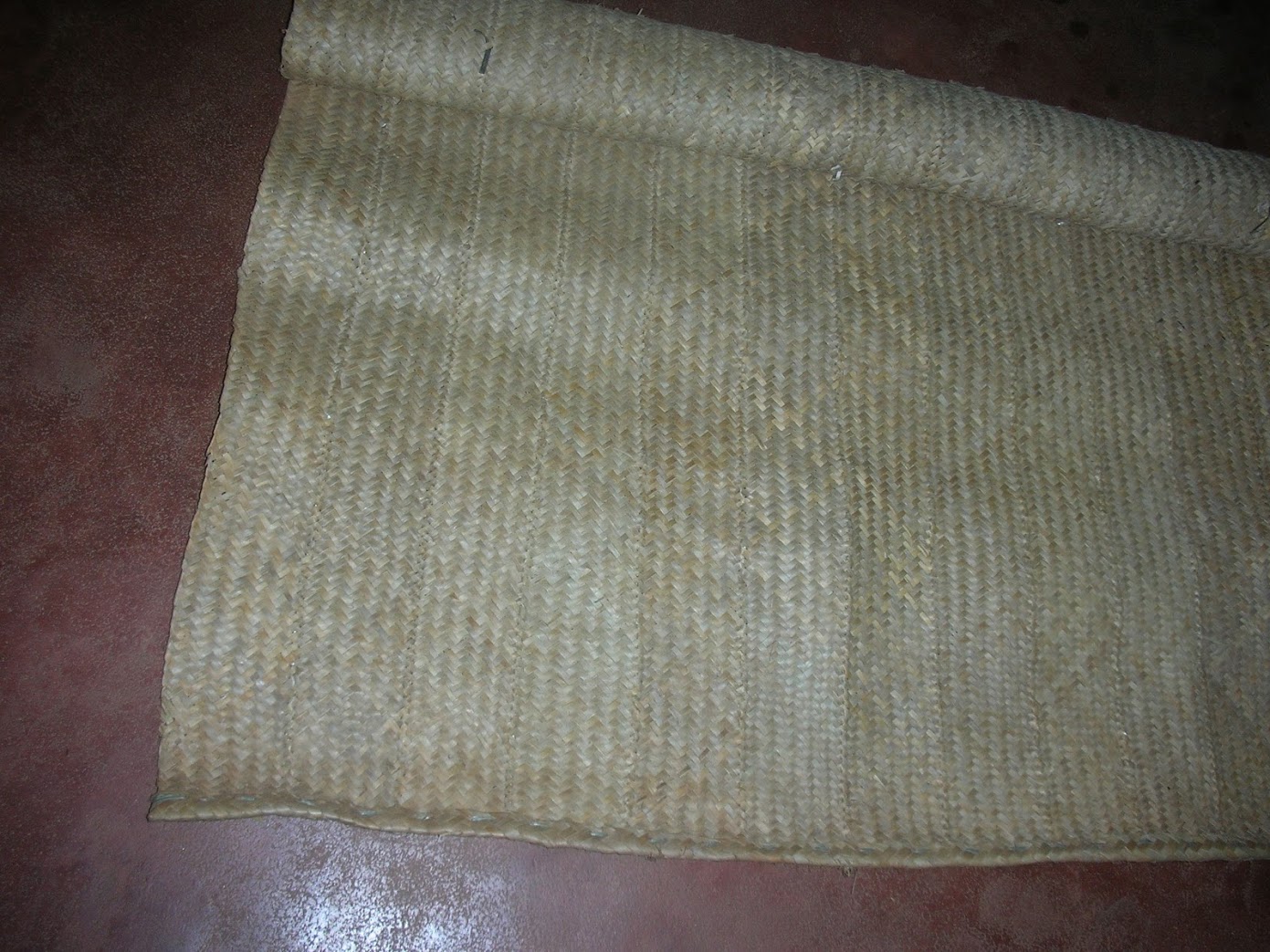
 |
Palm leaves (Arecaceae spp.) are gloriously fibrous and make a moderately strong for weaving |

Basketry is a unique rural craft. done by hand and each basket has its story weaved in the local culture. What makes basketry, weaving craft so special is that it has evolved in cultures around the world, as we all collectively found the need to carry things, store items, find protection from rain and sun, and to build boundary lines or safety from wild animals and enemies Any basket that is woven of natural fibral is a true folk artifact. While modern mass production has all but replaced baskets with plastic and synthetic material.
1.River reed Geykana hullu : (cyperus malaccensis) Cyperaceae


2.Cane baskets
Until forest department banned harvesting canes from the forest for essentials cane baskets were part of their life the farmers and forest dwellers used to weave baskets for their daily use . it was used as a need and not for the greed baskets were useful for them to carry coconuts, for fishing, for carry manure soil, to store paddy seeds used as a partition in the house
baskets for different purpose and with different design depending on the functional value is a interesting story when you study the baskets of uttra kannada in a cultural ,functional contexts it overwhelming to how the design evolved to make it easier to use
 |
| To harvest arecanut from the tree |
 |
| mannina butti normally for rough use like carrying loads like soil manure |

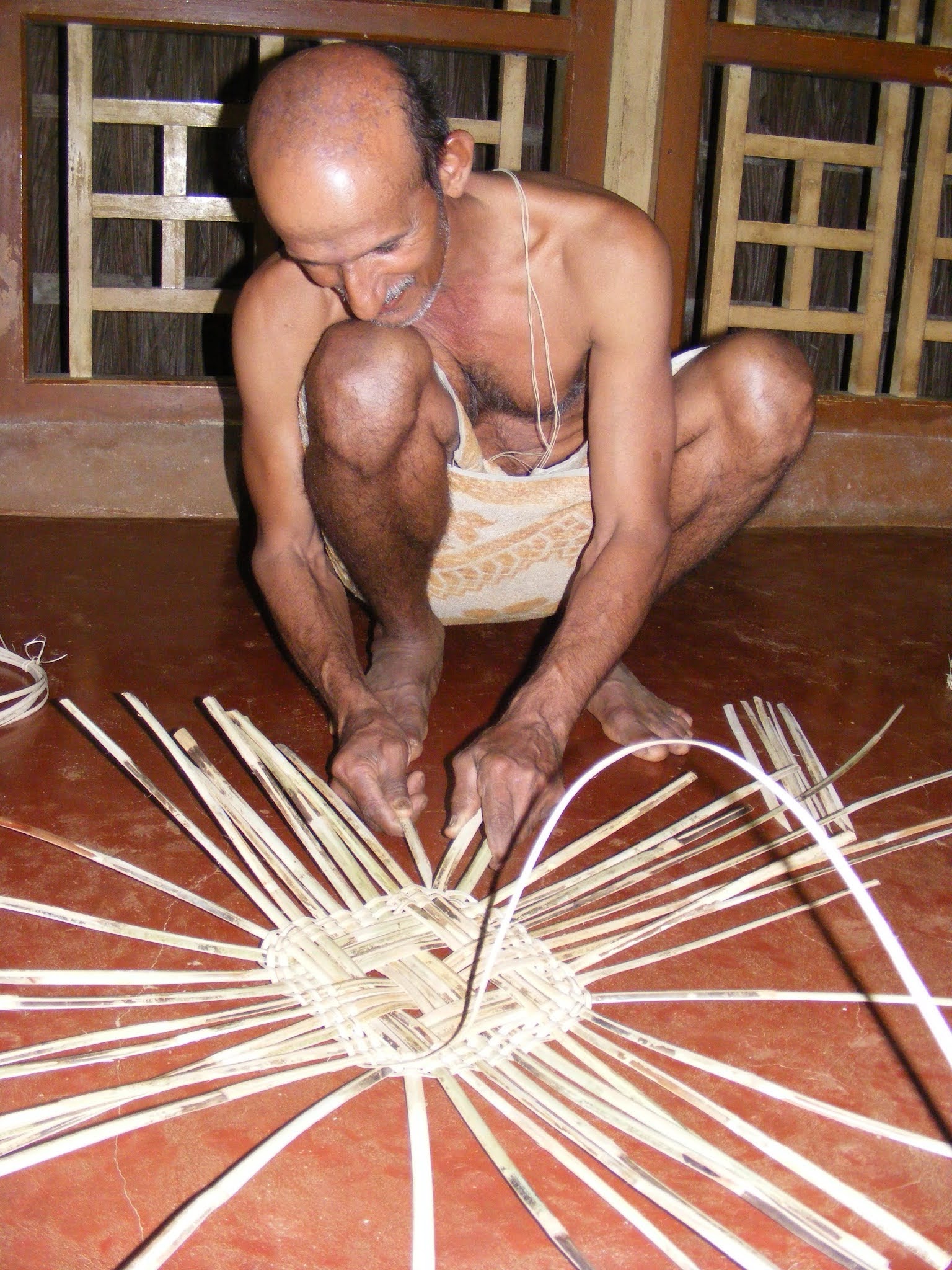
 |
| Chooli mutti to collect coconuts |
Baskets were vey essentials for the framers and villagers in their daily life Unfortunately the forest department in Karnataka banned harvesting cane for the forest dwellers and farmers in Uttra kannada region . and the local craft of basket weaving is fast disappearing .Now you see deep in the forest also plastic baskets replaced the natural baskets which looks out of place
3. Wild Vine basketry-Kurl balli


In the forest vines have always been readily accessible and plentiful for weavers, they have been a common choice for basketry purposes. The runners are preferable to the vine stems because they tend to be straighter.

Buda folklore Explore the art of traditional basket weaving using the wild vine which can be harvested from the forest of Angadibail.


