Saturday, July 9, 2011

Folk Art- Hase Chittara


Hase chitra  or hase chittara  is a folk art practiced by the Deewaru community in Shimoga, Sagara   and Uttara kannada district of Karnataka.


The walls are colored with red mud found abundantly in the region and designs are drawn in white paint derived from rice paste and white mud.
The lines and patterns on these paintings each symbolize an aspect of nature or depict the religious, social agricultural practices of the community. The drawing has been seen on the walls, doorframes, and doorsteps in the villages of malenadu region.

Materials used
The materials used for this art is natural .The community makes its own colours  deriving from natural sources such as bark of trees, wild Barrie, seeds, rocks, minerals, and vegetables. Kemmannu (red earth), akki hittu (rice flour), masi kenda (coal), kaare kai (one kind of berry), guragekaai (which gives yellow colour) hittu, Sunna (lime stone), turmaric, milk etc has been used to prepare white,black,red and yellow natural colors.


Types
 While the designs on the paintings are common across the entire community the paintings are divided in to three types according to the use of colours. They are bili hase, kappu hase, kemmannu hase.
 Base
The drawing has been seen on the walls ,door frames,and window frames. It can also been done on Bamboo basket .Genarally the base is Kemmannu(red earth)While dwcorating the bamboo basket the base has been prepared by applying the mixture of red earth and cow dung,


Brush
To draw the lines the community use a natural brush made by grass straw and a natural fiber  .Now the artists who learnt this art from the community uses paiting brush and artificial colours .
The original brush:
Our artisan Kanne from Siddapura,Uttara kannada uses this hand made natural  brush which is considered the original way of painting in this community .


 They use straw and a natural fiber to make brush. The fiber will be inserted in the straw and tie a knot to keep it on place.


  One needs a lot of patience to draw these lines. Women have mostly done this art.


Occasions
This art takes place in marriages and festivals (bhoomi hunnime habba).In bhoomi hunnime festival women decorate the bamboo baskets with this art. The base has been prepared by applying the mixture of red earth (kemmannu)and cowdung on the basket. They draw hase chitra by using finely grounded riceflour on this basket.
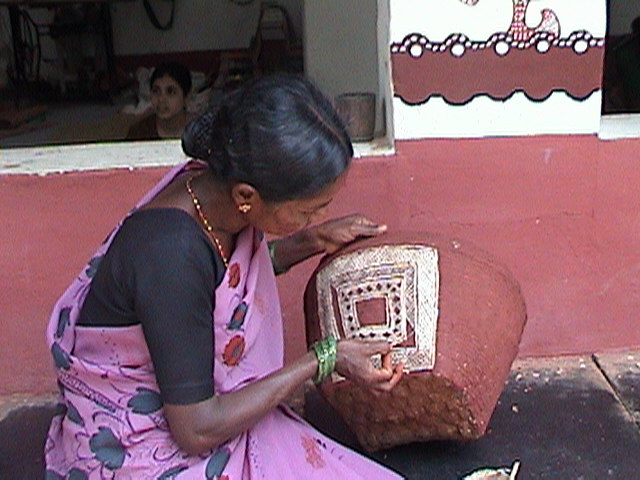
The common motifs are seete mudi,bhattada saalu, kuchhu saalu,maduve pallakki,dibbana hakkigalu, ettugalu,tirugu mane,gombe saalu,banave etc which has been taken from daily life .
In the marriage ceremony Hase chitra is drawn on the wall where the ritual takes place

.

The common motifs in the marriage are 

pallakki(carriage).dibbana hakkigalu(twin birds/love birds),

bride and bridegroom etc. 

Monday, June 20, 2011

Honnavar- monsoon retreat


Honnavar, a coastal town, is about 450km from Bangalore and an overnight journey by bus from Bangalore. The landscape of Honnavar, with the Western Ghats on one side and the Sharavathi River and the Arabian Sea on the other, is unique in its location.


Honnavar in the monsoon months of June to September is truly magical, a time of year when nature is at its best and most bountiful with full-flowing rivers and streams, and lush green countryside during monsoon season.. Beautiful beaches, forests, small islands, waterfalls, back waters, estuary, mangroves are all a part of the natural landscape and make the place beautiful in monsoons.


Monsoon season is even the perfect time for trekking and eco adventures! Or you can walk along the beach and experience the fury of the sea, when giant waves hit the beach in full force


 Come here just to see what rain is and what life is all about! 


The geographical landscape of Honnavar with the Western Ghats on one side and the Sharavathi River and the Arabian Sea on the other side is unique in its location. Beautiful beaches, forests, Islands, Water falls, back waters, estuary, mangroves,  are part of the natural landscape.


We prefer a small group of 15to 20 participants  for the monsoon retreat . . .
Accommodation will be simple and sharing rooms .It is totally  informal event .There will be small trekking s.. forest walk.. boat ride.. hill trekking .. interaction with tribal community  and getting wet in the rain is the highligt of the programme.


We are going to  experience the sea.. waterfall.. river and a forest in  the poring rain. 
Apart from that  Nugli, Sukrajji and Hanmi (our resource persons ) will enrich your folklore through  medicinal plants.. folk art..folk  museum.. 


There will be home made local cuisine that you will definitely  enjoy. .Try to come 


Honnavar is totally different in winter aswell .
There will be more programmes in the winter too .I will update you on this.
I will be sending detailed schedule, other essential informations   and the bus details  in the next letter. 


For more information on how you can participate please write


Saturday, February 12, 2011

Kunthi and her illegitimate son Karna .....the sea... and the unknown...!! A story of Kunthi from Tribal Mahabharatha


Visit blogadda.com to discover Indian blogs
ಕುಂತಿ ಮುಟ್ಟಾಗಿ  ಒಂದೇ  ದಿನವಾಗಿತ್ತು. ಕುಂತಿಯ ಅಪ್ಪ ಮುಳ್ಳು ಬೇಲಿಯ ಕದ ತೆಗೆದು ಹಿತ್ತಲಿಗೆ  ನಡೆಯುತ್ತಾನೆ. ತೂಗುವ  ಹೀರೆಕಾಯಿ  ,ಬಾಗುವ ಬದನೆ ಕಾಯಿ ಕೊಯ್ಯುತ್ತಾನೆ. ತುಡುಪದಲ್ಲಿ  ಮಡಗುತ್ತಾನೆ .ಹಿತ್ತಲಿನಿದ ತಿರುಗಿ ಬರುತ್ತಾನೆ.  ಮುಳ್ಳು ಬೇಲಿಯ ಕದವನ್ನು ಜಡಿಯುತ್ತಾನ

ಕುಂತಿಯ ಅಪ್ಪ. ಬಟ್ಟರ ಮನೆಯ ದಾರಿ ಹಿಡಿಯುತ್ತಾನೆ. ಭಟ್ಟರ ಮನೆಯ ಅಂಗಳದಲ್ಲಿ ನಿಲ್ಲುತ್ತಾನೆ.  .ಭಟ್ಟರು" ಯಾವಾಗಲು ಬರದವನು ಇಂದ್ಯಾಕೆ ಬ೦ದಿಯೋ .ಬಂದ ಕಾರಣ ಹೇಳು"  ಅನ್ನುತ್ತಾರೆ . ಕುಂತಿಯ ಅಪ್ಪ -"ಮಗಳು ಮೀಯುವ  ದಿನ ನೋಡು "ಎನ್ನುತ್ತಾನೆ .ಭಟ್ಟರು ಪುಸ್ತಕ ತೆರೆದು ನೋಡುತ್ತಾರ." ಕುಂತಿಯ ಅಪ್ಪನೇ ಕೇಳು- ಹಿತ್ತಲಲ್ಲಿಯೇ ಬಾವಿ ಕಡೆಯಬೇಕು.... ಕುಂತಿ ಅಲ್ಲಿಯೇ ಮೀಯಬೇಕು:" ಎಂದು ಹೇಳುತ್ತಾರೆ. .ಭಟ್ಟರ ಆ  ಮಾತು ಕೇಳಿಕೊಂಡು  ಕುಂತಿಯ ಅಪ್ಪ  ಮನೆಗೆ ಬರುತ್ತಾನೆ.

ಕುಂತಿಯ ಅಪ್ಪ ಊರ ಮಕ್ಕಳಿಗೆ ಬರಲು ಹೇಳುತ್ತಾನೆ. ಊರ ಮಕ್ಕಳ ಕ್ಯೆಯಲ್ಲಿ ಗುದ್ದಲಿ ಕೊಡುತ್ತಾನೆ  ,ಊರ ಮಕ್ಕಳು ಹಿತ್ತಲಲ್ಲಿ ಬಾವಿ ಕಡೆಯುತ್ತಾರೆ . ಬಾವಿಯಲ್ಲಿ ಒಂದೇ ದಿನಕ್ಕೆ ನೀರು ಬರುತ್ತದೆ. ಕುಂತಿಯ ಅಪ್ಪ ಕುಂತಿಯನ್ನು ಕರೆದು ಹೇಳುತ್ತಾನೆ "ಕುಂತಿ ಕೇಳೆ... ಹಿತ್ತಲಲ್ಲೇ ಬಾವಿ ಕಡೆದಿದ್ದೇನೆ...  ಅಲ್ಲೇ ಸ್ನಾನಮಾಡು .. ಸಮುದ್ರಕ್ಕೆ ಹೋಗಬೇಡ " ಎನ್ನುತ್ತಾನೆ  ಅದಕ್ಕೆ ಕುಂತಿ ಹೇಳುತ್ತಾಳೆ. "ಕೇರೆ ಹಾವಿನಂತೆ ನಾನು ಹೊಂಡದಲ್ಲಿ ಬಡಿದಾಡುತ್ತಾ ಮೀಯಲಾರೆ ... ನಾನು ಮೂಡಣ ಸಮುದ್ರಕ್ಕೆ ಹೋಗುತ್ತೇನೆ..." ಎಂದು ಹೇಳಿ ಸಮುದ್ರಕ್ಕೆ ಹೊರಡುತ್ತಾಳೆ ಕುಂತಿ."ಮೂಡಣ ಸಮುದ್ರದಲ್ಲಿ ಕಳ್ಳರಿರುತ್ತಾರೆ ಇಲ್ಲೇ ಮೀಯು" ಅನ್ನುತ್ತಾನೆಕುಂತಿಯ ಅಪ್ಪ. ಕುಂತಿ ಎಷ್ಟು ಹೇಳಿದರೂ ಕೇಳುವದಿಲ್ಲ ......

 ಕುಂತಿ ಅಪ್ಪನ ಮಾತು ಮೀರಿ   ಮೂಡಣ ಸಮುದ್ರಕ್ಕೆ ಹೋಗುತ್ತಾಳೆ . ಸುಮದ್ರ ತೀರದಲ್ಲಿ ಹೋಗಿ ನಿಲ್ಲುತ್ತಾಳೆ.ಕುಂತಿಯಮ್ಮ. ಮೊಣ ಕಾಲಿನ ನೀರಿಗೆ ನಡೆಯುತ್ತಾಳೆ....ಮಂಡಿ ನೀರಿಗೆ ನಡೆಯುತ್ತಾಳೆ.... ಸೊಂಟದ ನೀರಿಗೆ ನಡೆಯುತ್ತಾಳೆ..... ಕೊರಳ ತನಕ ನೀರಿಗೆ ನಡೆಯುತ್ತಾಳೆ ...... ಹಾಲಿನ0ಥ ತೆರೆ ಬರುತ್ತದೆ...., ನೀರಿನಂತ ತೆರೆ  ಬರುತ್ತದೆ..... ನೆತ್ತರಿನಂತ ತೆರೆ  ಬರುತ್ತದೆ

 ಕುಂತಿ ಹೊಳೆ ನೀರು ಮೀಯುವಾಗ ಕಳ್ಳತನದಲ್ಲಿ ಬಂದವರಾರು....?ಆತ  ಸಮುದ್ರದಲ್ಲಿ ಕಳ್ಳನಂತೆ   ಶೋದಿಸುತ್ತ ಕುಂತಿ ಇದ್ದಲ್ಲಿಗೆ ಬರುವನು. ನೀರಿನಲ್ಲಿ ಕುಂತಿಯ ಸಂಗ ಮಾಡುವನು . ಕುಂತಿ  ಬಸಿರಾಗುವಳು
ಕುಂತಿ ಮನೆಗೆ ಬರುವಳು.

ಕುಂತಿಗೆ ಹೆದರಿಕೆ ಯಾಗುತ್ತದೆ. ಕುಂತಿ  ದನಕಾಯುವ ಬಯಲಿಗೆ ನಡೆಯುತ್ತಾಳೆ.
ದನಕಾಯುವ ಮಕ್ಕಳನ್ನು ಕರೆಯುತ್ತಾಳೆ . ತನ್ನ ಪಕ್ಕದಲ್ಲಿ ಕೂರಿಸಿಕೊಂಡು ತನಗೊಂದು ಮದ್ದು ಹೇಳೆಂದು ಕೇಳುತ್ತಾಳೆ."ಕೆಳೆಲೇ  ಕುಂತಮ್ಮ ...ನೀನೆ ಕೇಳೆ ...ನಾವೆಂಥ ಮದ್ದು  ಹೇಳುವದು..? ಎಂದು ಪ್ರಶ್ನಿಸುವ ಗೋವಳರು ಕುಂತಿ ಗೆ ಮದ್ದು ಹೇಳುತ್ತಾರೆ. "ಹಾಳು ಕರ್ಕಿ ಬೇರು , ಕಾಡು ಬೆಂಡೆ ಬೇರು ಯನ್ನು ಅರೆದು ಕೊಳ್ಳೆ ಕುಂತಿ.... ಅದನ್ನೇ ಕುಡಿದುಕೊ.....". ಎಂದು ಹೇಳುತ್ತಾರೆ.  ದನದದಕೊಟ್ಟಿಗೆಯಲ್ಲಿ ಮಲಗಿಕೊಳ್ಳೆ  ಕುಂತಮ್ಮ ....." ಎಂದು ಸಲಹೆ ನೀಡುತ್ತಾರೆ ಕುಂತಿ ಅಲ್ಲೇ  ಗಂಡು ಮಗುವನ್ನು ಹಡೆಯುತ್ತಾಳೆ ಗಂಡನಿಲ್ಲದೆ ಗಂಡು ಮಗುವನ್ನು ಕುಂತಿ ಹಡೆದಳೆ0ದು   ಊರವರೆಲ್ಲಾ ನಗುತ್ತಾರೆ.


Monday, November 29, 2010

Gersoppa- Nagar Basti


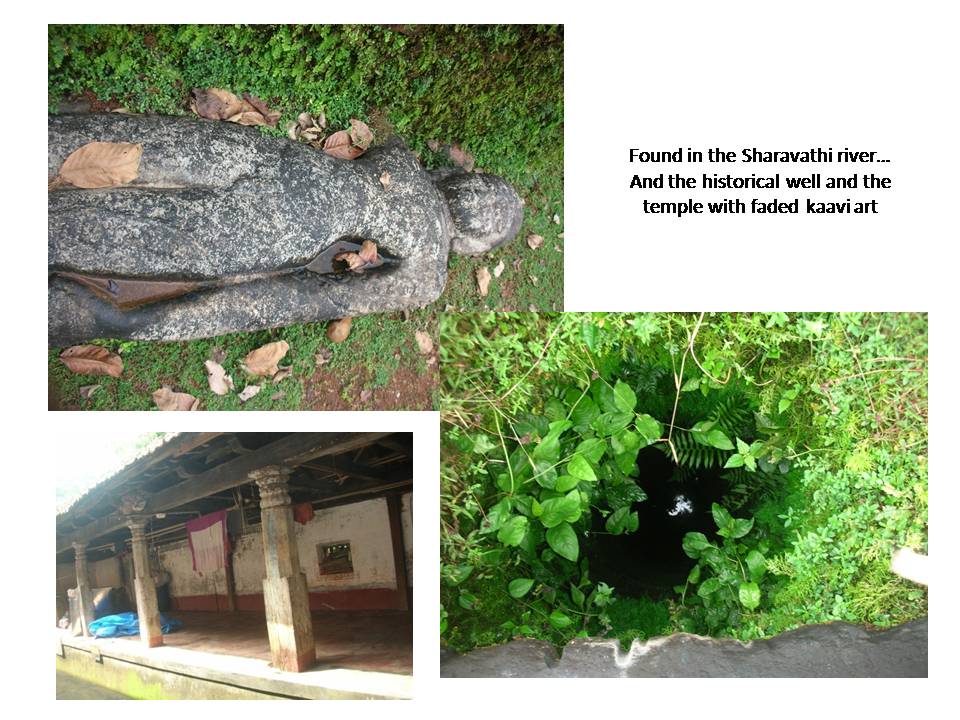
A village in Honnavar ,Gersoppa is 24 KM from Honnavar The place is mentioned in several inscriptions as Naggarbastikeri,or just Nagare. It is on the other side of the river Sharavathi.On the bamk is the present village and on the other the old town with its historical remains.This was the capital town of the Salwa kings of Gersoppa from the early 14th century and continued to be so till 1606


There is a small boat taking people across from the river bank. My mother and i waited this side of the river bank thinking about how to reach Nagar basthi.We enquired people about the duration of time to reach basthi They are not sure ..It is varied 30 min to one hour .I was not in a mood to trek that far as i was tired due to my previous days beach trekking


It was Deepavali time early morning we reached the river bank.Boat men are not ready to take us until they performed Puja to their boat.We waited almost 1 hour to get this ritual get over


We negotiated for 150 rupees to reach Nagarbasthi in a boat. A journey along the river Sharavathi ill Nagar basti by moter launch is an enchanting experience


.Sharavathi river made her way in the middle of thick forest. My mother told me that Sharavthi is called Gersoppe Hole from the local people.


 I was there to just to find out what is left in nagar basthi. I still have the faint memories of my trip to Nagarbasti during my school days.. Thick forest..   Ruins… carpet of dry leaves,, no traces human habitat and a story  of robbers unseating of  one of the thirathankaras idol in the hope of finding treasure. . 


With all these memories I am visiting this place again with my mother  after 28years  !!


we walked on a path in the thick forest.. Nobody was there.. My mother ,boatman and me.. 


We  reached a place where we could see the ruins of jain establishments and beautiful Chaturmuhkha basadi in the middle of the forest.


 The quietness …the ruins …and the forest  took me into different  era …I could feel in  the air …..that historical moments….!!!!!  


……I felt like   I am Chennabhairadevi, the Queen of Gersoppa.!!!!
and I opened the front door of historical 
jain basadi!!! It was a great feeling ….( actually watchman went behind and unlatched the front door from inside )


      I could hear the voice in that silent forest.....I could hear the voice in that silent forest….
…….We must deal with her, most carefully and diplomatically. We must be courteous, polite and diplomatic to win her to our side”


Chennabhairadevi, the Queen of Gersoppa
Chennabhairadevi -Raina- Da-Pimenta or "Pepper Queen"
• Chennabhairadevi belonged to Tuluva-Salva lineage wherein the ruler or
a noble was succeeded by his sister's son or "aliyasantana“

• Chennabhairadevi, who had the longest rule for fifty four years, showed
rare statesmanship, bravery and shone as patron of all religions and sects.
• Akalanka, the Jain scholar and Bhattakalaka, the renowned grammarian
were protégés of Gersoppa queen.
• Inscriptions call Chennabhairadevi, as ruler of Haiva, Tuluva and Konkan
areas. These roughly comprised of North and South Kanaras, southern
region of Goa and Malbar
• This entire belt was known as pepper country, where the spices grew
abundantly in the virgin forests, which were in great demand in Europe.
Actually Chennabhairadevi was known as Raina- Da-Pimenta or "Pepper
Queen".


• Though the Vijayanagara empire was on the decline, the queen called
herself a subordinate of Vijayanagar rulers. She was always busy checking
the advances of Portuguese. At the same time she had to be ever alert
with the rulers of the adjoining Keladi kingdom and Bilgi chiefs,. They
always tried to grab the harbors and trade.
• The efforts of Keladi Nayaka and Bilgi chiefs continued to pull her down.
They jointly attacked Gersoppa, completely defeating the brave queen.
Gersoppa thus became part of Keladi kingdom. The ageing queen was
taken a prisoner and died in a prison in Keladi.
• Thus ended the rule of a brave, kind, tolerant and benevolent queen who
perhaps had the longest reign as a woman ruler in Indian history.


         Chaturmukha Basadi is the chief one, a beautiful structure built in the Vijaynagar style with four 
            entrances from four directions which lead to the garbhagriha, which has four separate sets of
                            idols facing the four entrances. The temple is built in grey granite. 


The four idols in the
garbhagriha are of the Tirthankaras seated in the padmasana posture.


You may also hear untold stories in the air........!

Wednesday, September 29, 2010

Winter Beach Trek from Honnavar to Gokarna

This is a warm invitation to students and friends familiar with the work happening at Honnavar to join me on a winter beach trek and to spend a few days at Honnavar in the month of October and January. I would like to have a mixed group of students and friends, do feel free to invite your friends. Let us limit this to age 15 up.


Dates are slightly flexible and can depend partly on the participants' convenience. The tentative dates are 23rd Oct to 30th Oct  and 14 th Jan  to 17th Jan. If moving the dates a little bit this way or that enables you to join us, please let me know.


I am thinking of a beach trek of four days followerd by four days at Honnavar, involved with activities here, interacting with tribals and making day trips. The beach trek will start at Honnavar and end @ Gokarna


You are welcome to participate only in the beach trek, only for the days at Honnavar, or for the whole trip. in the month of January.


Please let me know if you are interested by 15th Oct and 5th Jan. You can either contact me directly on Facebook or email me at folkloreindia@gmail.com. Do also use the RSVP feature on facebook. And invite your friends. 

Educational tours at Honnavar

Buda folklore -a center for folklore research and documentation located in Honnavar -Uttara kannada region. is conducting educational tours on environment and culture in the Western Ghat region.


Buda Folklore Center dedicated to the understanding of local cultures and traditional knowledge backed by over 45 years of field research and documentation. The organization has established folklore Center as a predominant area of study and research with a vast database on various tribes and indigenous communities of uttara kannda region , thereby creating public access and awareness about folklore

The folklore center has designed study modules based on the topic of interest. The expertise , who are pioneers in folklore research will guide, provide assistance with local liaison and also host the students on such a programme.


Study of Tribes


The organization works primarily in rural settlements. It takes students and culture travelers to the field to gain hands on work experience and thereby understand the complexities that the native population deal with on a daily basis.

Currently focused on four tribes (Gammokkalu, Kare okkalu, Halakki, Gonda) whose settlements are located around Honnavar.

Buda believes that one of the most exciting aspects of heritage education is experiencing our folk culture first hand and understands the interrelationship between land and people and their way of life.


Forest Folklore (environment group)..

Food and health

Study of medicinal plants, meeting folk healers, , eco friendly way of living ,indigenous knowledge etc.


Forest food

Study of underutilized, uncultivated edible leaves, roots, barriers from the forest


Eco system-
mangroves, estuaries, threats from various human activities.

Bio diversity, study of islands, river and the sea


The 3 routes- 

Buda-has initiated a study tour programme for schools and colleges along the sea route, forest route and the river route in order to bring awareness and education in the folklore culture for the past few years in Honnavar.

 
o The river route.

o The sea route

o The forest route

This helps the students to connect the particular place, people and the life, as they are always been interconnected. In addition, they can study how the environment influences the life of the people and visa versa.


A study programme:


There is immense scope to use this knowledge to build and explore new avenues, revisit documented knowledge at field level, understand prevailing stresses or simply showcase the volume of work into modules that are eye-catching.


The foundation would like to encourage students to study folklore. The purpose is entirely academic and community centric. The effort is to understand folk culture and heritage. Hence the foundation would like to initiate diversified studies ranging from a week to a year. It invites students and other interested individuals who would like to explore first hand field research, learn and document.

Focus can be on….

Community Development

Preservation and continuity of traditions

Sustainable Community

Spirit of Innovation

PHASE 1
o INTENTION

Interacting with families- understanding their lives, their context in which they live and understanding living traditions, study of environment, study of individual families

Study of tribes in the village

Demographic survey- environment, resources, population etc

PHASE 2

o NEEDS and CONCERNS

understanding of culture, modernity and identity

Traditional knowledge systems of the tribes

Exploring each aspect of culture

Research and Documentation-In collaboration with Buda

PHASE 3
o INTERNSHIP

Product Development

Design intervention

Working with artisans
Food, art and craft


Internships/projects:


Buda hopes to initiate a strong study and research assistantship programme that brings together students and people from diverse parts of India and the world, for the preservation and continuation of Folklore heritage.

Buda provides opportunities to interested individuals who may participate in a wide variety of capacities and projects, depending on their skills and interests. Various options of fieldwork and documentation work are available. Internship FF is involved in various projects and programs in the field of conservation, documentation and preservation of folk culture.

It aimed to create a forum where the students could discuss and explore themselves such as cultural heritage, environment, sustainable development, craft and folk art and the state of indigenous communities. It was an attempt to make connections between people and environment cultural memory, and language, identity in expression of art/craft /other performances, sustainability and biodiversity.

Traditional Baskets and other weaving crafts with natural fibers in Uttara Kannada-western Ghat region

  While  weaving craft with natural fibers  is one of the widest spread crafts in the history of any human civilization, it is hard to say j...