Friday, July 19, 2013

A River runs through it...


Photos and write up :
Poornima Travelling Sukumar-Volunteer @ buDa folklore


Learning begins at home…
A group of children accompanied by two teachers from a school in Bangalore called, Shibhumi set out on a 10 day long trek Covering the River route, Sea route and the Forest route with buDa folklore.


It slowly caught up with the kids getting used to the place, noticing everything around them, very aware of their surroundings with all their senses active.


The day began with them waking up for a walk to view the sunrise.
“ The sunrise was my favorite part of the day” says Arundathi.


The best part for us in buda was to watch them sitting in immense concentration with the urge to learn.


The session began with hanmi, a session of “shedi art”
               
as we proceeded further, soon all of them had their hands muddy, everyone joined in and were set to make their own art works.
“i want to do this all day” says


“every child is an artist. the problem is how to remain an artist once we grow up”
- pablo picasso


as they all sat down to try this art form, which slowly seeped down to experimenting with the given materials. hanmi wore a smile, by the end of this session.


The eve famous weaving was out next plan of action. the process of weaving usually tends to get tangled, and when it does, you know you are on the right track.

               
Weaving was a more challenging and skill based, it required all their attention and the techniques right. “at first it was difficult, and ater once you know the right place to put it in, it gets fun” says paapu.


 we were gifted with fun-filled instructors, who made it seem like a very simple task, and were always patient to teach each child to make his/her own.          


what we at buda learnt through this process was “imperfection has its own beauty” the process of learning is what counted.


we were taught to make other toys out of leaves and simple weaving.
“I am going to gift one of these glasses for my sister” decided bhairav.


the most awaited trek to the railway tunnel, through which the konkan express passes by. we ware right on time to watch the train just hustle through us.


soon we charged towards the river, where a boat awaits us.


A scurry to sit around the corners of the boat, we were all set to visit the first island of the trip. Mavinkuruve.


Mavinkuruve was a small and a peaceful island, and has had a history which was famous for hand made locks. these locks are rare and are not made anymore.


Another interesting art form that was found in the island, in the premises of a temple was “kavi art” . etching on the stone.


Soon our walk around this friendly island was coming to an end with a nice “kasaya” (local beverage like chai) and some crunchy pakkodas.


the children then spent some quiet time on the banks of the river just when the moon rose.


“may what i do flow from me like a river; no forcing and no holding back, the way its with children”
- Rainer maria rilka

               
our next setting was to trek to a waterfall called apsarakonda.


Walking through amazing fields of gold.


the findings of a few rocks lead the entire group into an outburst of excitement, and they were allowed to explore it, climb it and figure it out themselves.


the joy of trekking is the magic of how sensitive our senses can get. and spotting a kingfisher was the highlight  of the trip for many.


the panoramic view of the ocean so blue, the apsarakonda beach.


some findings during our nature walk.


"All truly great thoughts are conceived while walking"                 _friedrich Nietzche.
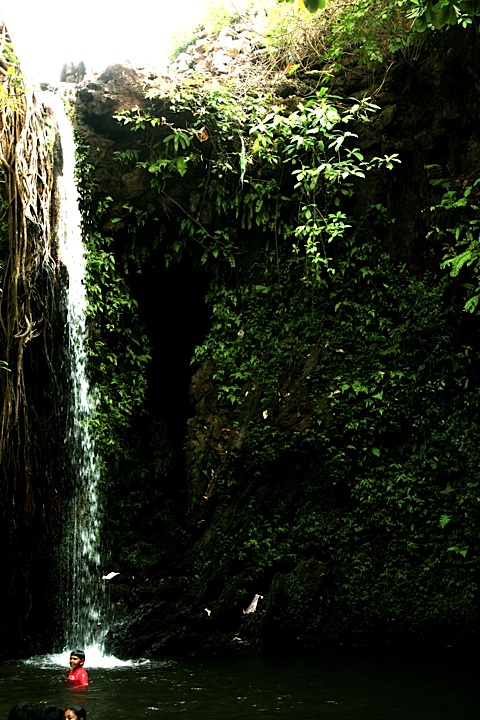


the sounds of a pounding waterfall may seem to be the most soothing. whats better is jumping into them!


a view of the tribals and their environment, what they eat, play, dance, a little exchange of knowledge and perspective. a learning experience.


some of them got to see the pounding of the paddy and making of the hot porridge.


some explored the local crafts with eco friendly materials available in the vicinity.


"learn as if you were to live forever" _Mahatma gandhi


a great experience when the interaction happens and the learning begins...


music by the tribes.


the interaction with the tribe folks came to a happy conclusion with mixed feelings and emotions. and our next stop the next day was to another island on river sharavati.


 A river is a river, always there, and yet the water flowing through it is never the same water and is never still. It’s always changing and is always on the move.


we were headed to learn the art of coir rope making.


so everyone had a story to share, many actually. the rivers were our only guide and taught us to flow, ever  lively, ever versatile. Thank you river.


Tuesday, February 26, 2013

The need for conservation of diverse languages and mother tongues


Sources:Deccan Herald
Wednesday 27 February 2013

It is estimated that 50 per cent of the world’s languages are endangered, which means there are fewer people who are speaking a particular language. One language disappears every two weeks! World over the people are embracing those languages that bring them economic prosperity and helps them to earn livelihood. In the modern globalised world it is the domination of three languages—English, Chinese, and Spanish that take the toll of local vernacular languages. By adopting industrialised mode of production and copying western civilisation we are forcing the people to follow a single monolithic way of life that is devoid of diversity. This urge to follow the uniform pattern of life and culture has no space or respect for diversity of languages. 

Complex classification
According to Unesco “there is a fundamental linkage between language and traditional knowledge. Local and indigenous communities have elaborated complex classification systems for the natural world, reflecting a deep understanding of their local environment.” It cautions that these will be lost when a community shifts to another language. The local languages have the better capacity to adopt and evolve strategies to arrest the biodiversity loss. It is now recognised that the local language can be an effective tool towards sustainable conservation and management of biodiversity. 

Recognising the need for conservation of diverse languages and mother tongues the Unesco has adopted a resolution to celebrate February 21 as World Mother Language Day. This is in memory of those people who sacrificed their lives on February 21, 1952 in Bangladesh, for the sake of Bengali being recognised as national language in erstwhile East Pakistan. 


These lofty goals remain on paper and the ground reality presents a dismal scenario. The present trend of neo liberalisation has taken a toll of local languages. According to Bhasha, an organisation working on conserving the oral traditions of marginalised communities, a total of 1,652 mother tongues were documented in the Census of 1961. Several hundreds are not even traceable today! Where and how have they become extinct? Unfortunately, our policy makers have no clue about the causes for the demise of these diverse languages. 

In February 2010, as the world was preparing to launch International Year of Biodiversity, Boa Senior, the only speaker of Bo language in Andaman Islands passed away. With her death, a 70,000 year old language, a unique heritage of mankind became extinct. With this extinction we not only lost a language, but lost an entire knowledge system, which was different from the industrial age. 

These are clear indicators of extinction of the languages. The phenomenon is not limited to ancient languages but there is lingering threat to existing vernacular languages spoken by thousands of people. Nevertheless, India is about to witness a further decimation of the languages as a majority of the people embrace the dominant language of English or Hindi. It is high time that we need to understand the close linkages of biodiversity and languages and heed the call of Unesco to take help of these diverse languages to rescue biodiversity before both become extinct.

"a total of 1,652 mother tongues were documented in the Census of 1961. Several hundreds are not even traceable today!" That is a shame. Culture and nature are deeply interrelated to languages, for sure their extinction consequently brings lack of important information. Another down side of extreme and violent globalization :(

Sources: -Deccan Herald
Wednesday 27 February 2013

Friday, February 1, 2013

She weaves her hopes and dreams together ...


 Posted by Ramya Ranganathan

Ramya visited Honnavar with her family and touched with Hanmi ajji's simplicity and her all time weaving spirit  ..For Hanmi ajji weaving is like a meditation  ..over and again... !!!

Craft..


She weaves together these strands of paddy
She weaves together these blades of grass
She weaves her hopes and dreams together
As today seamlessly into tomorrow does pass

Oblivious to all she just weaves on
With concentrated precision and dedication
With single-minded focus she makes each move
Creating her art with love and conviction

It looks like she does not need to rest
It looks like this itself is her rest
She appears to gain and spend energy
As she gives her work her very best

This is her art and her identity
It is her work and her play
She is steeped in it, immersed it in
As she gives to it, her all today

This is craft, this giving of all
This is craft, this act of creation
This is craft, using material as medium
To the sense the souls urge and give it vision.

Saturday, October 13, 2012

Indian Tribes-Oral Heritage


Hanmi is the one of the few artists who has mastered the oral epic songs and other verbal art.  She belongs to Gamokkalu tribe from Uttara Kannada district Karnataka .Sadly now Hanmi is the only person in her community who can sing the entire Mahabharata and we are losing time .

There is a  need to document not only the oral literature of this tribe but it is equally important to document the way they sing, the tunes and the contexts to understand the culture and tradition of this tribe .The treasure trove for the next generation.

Monday, June 18, 2012

The Art of Traditional Quilt Making with Nirmalakka—3-Day Workshop@ Bangalore


The Art of Traditional  Quilt Making  BuDa with Nirmalakka—3-Day Workshop@ Bangalore


Mark your calendars! Due to countless requests, Nirmalakka will be returning to Bangalore to present her 3-Day Quilting Workshop from Buda folklore.

Quilts and other-cloth-based narratives are part of many cultures. Nirmalakka, who works with buDa folklore uses her expertise in needle craft to make traditional quilts that have passed down from mothers to daughters from generation to generation. She will not only share her techniques and patterns in the process of stitching these traditional fabrics, but also share her customs and colourful heritage with you.

Now you can also have the opportunity to join Nirmalakka; and with her guidance, you also can appreciate this old, magnificent tradition while weaving your own stories through fabric.  Please join us—whether you are a novice or an expert in quilt creations.  You will enjoy spending time with Nirmalakka and making a mini quilt of your own.

The details are given below, but please contact us directly for further information and registration.  Due to the intimate, hands-on process of quilting, we do have limited space; however, we would love for you and your friends to join us.

The Art of Quilt Making with Nirmalakka—3-Day Workshop

Date: August 3-5, 2012
Time: 10am - 5pm
Venue: #117, Vakil Garden City, Near Talagattapura Police Station, Kanakpura Road, Bangalore 
Email: folkloreindia@gmail.com 
Pl send an email if you are interested and for more info on this workshop

For more info on Quilt making and other programs, please view these links:


Traditional Baskets and other weaving crafts with natural fibers in Uttara Kannada-western Ghat region

  While  weaving craft with natural fibers  is one of the widest spread crafts in the history of any human civilization, it is hard to say j...